Description
Tate’s Hell State Forest is approximately 212,645 acres located in Franklin and Liberty counties, sharing a border with the Apalachicola National Forest to the north. Tate’s Hell is a large patchwork of flatwoods and savannahs with an intricate web of creeks and wetlands. The forest features the unique dwarf cypress that only reach a mature height of about 15 feet, with some trees estimated at over a century old.Pitcher plant prairies hold a diverse mixture of carnivorous plants, wildflowers and grasses. The carnivorous plants include glistening sundews, butterworts, bladderworts and several species of pitcher plants which trap insects in their erect trumpet-shaped leaves. Tate’s Hell is home to a rich array of wildlife including deer, turkey, black bear, alligators, and many resident and migratory birds. The forest offers space, solitude, and unique natural beauty to the visitors
Geography:
The Cooked River, New River, and Oklocknee River have all been designated as Outstanding Florida Waters, and each meanders through this forest which spans across 2 counties and exceeds 212,00 acres. Complementing the natural water features are the open pine sand hills, dense woodlands, and over 900 miles of roads and trails. Tree species found on the forest include slash pine, longleaf pine, pond and bald cypress, maple, southern magnolia, hickory, and various species of oak. There is also an abundance of colorful wildflowers during the Autumn, including goldenrod, thistle, and blazing star. These natural features create excellent habitat for bald eagles, fox squirrels, gopher tortoise, white-tail deer, and turkeys, to name a few.
Recreation:
The Cooked River, New River, and Oklocknee River have all been designated as Outstanding Florida Waters, and each meanders through this forest which spans across 2 counties and exceeds 212,00 acres. Complementing the natural water features are the open pine sand hills, dense woodlands, and over 900 miles of roads and trails. Tree species found on the forest include slash pine, longleaf pine, pond and bald cypress, maple, southern magnolia, hickory, and various species of oak. There is also an abundance of colorful wildflowers during the Autumn, including goldenrod, thistle, and blazing star. These natural features create excellent habitat for bald eagles, fox squirrels, gopher tortoise, white-tail deer, and turkeys, to name a few.
Facilities:
This area is for hike in primitive camping only.
Facility will accommodate 2 tents and up to 5 people.
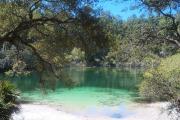
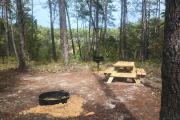
Facility has picnic tables, a fire ring, a bench, and grill. View of spring fed lake.
Nearby Attractions:
Attractions/Beaches.
Saint George Island Carrabelle Beach, Downtown Apalachicola shops, dining, local breweries in Eastpoint and Apalachicola.
County/State/National Parks, Preserves and Refuges.
St Marks National Wildlife Refuge, Bald Point State Park, Oklocknee River State Park, Apalachicola National Forest, Apalachicola River Wildlife and Environmental Area, St George Island State Park, Cape San Blas State Park





/-84.4836278,29.9509639,8,0/280x280?access_token=pk.eyJ1IjoiYXNwaXJhLW1hcHMiLCJhIjoiY2tlYmxiaWt3MDMwcTJ5cDN5bGwzZTUwNCJ9.IK2OEvl3EWmVLXYD9Rnedw "Find other facilities on map")